

INDEPENDENT THIRD-PARTY ANALYSIS

Know what is actually in the vial.

Purity and quantity by RP-HPLC with LC-MS/MS confirmation. Every certificate we release is hashed and anchored on a public ledger — including the ones that fail.

3–5 daysTYPICAL TURNAROUND
SHA-256ANCHORED ON CHAIN
Pass + failBOTH PUBLISHED

THE PROCESS

From the mailer to a document you can verify without us

Eight steps, every one of them on the certificate. Nothing here happens off-site and nothing is subcontracted.

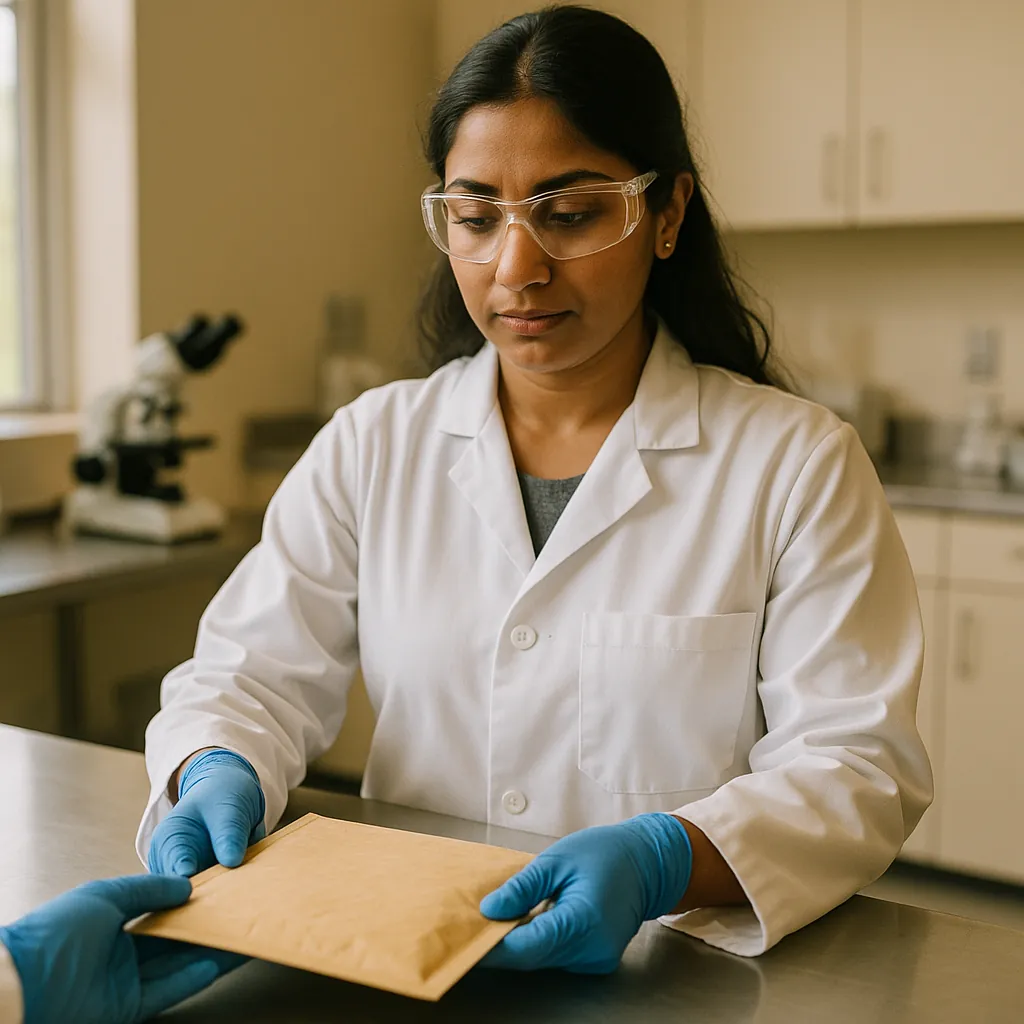
  1. Chemist receiving a sealed sample mailer at the receiving bench

    01

    Your sample arrives

    Sealed, logged, and assigned a lot number the moment it reaches the bench. Chain of custody starts here, not at the instrument.

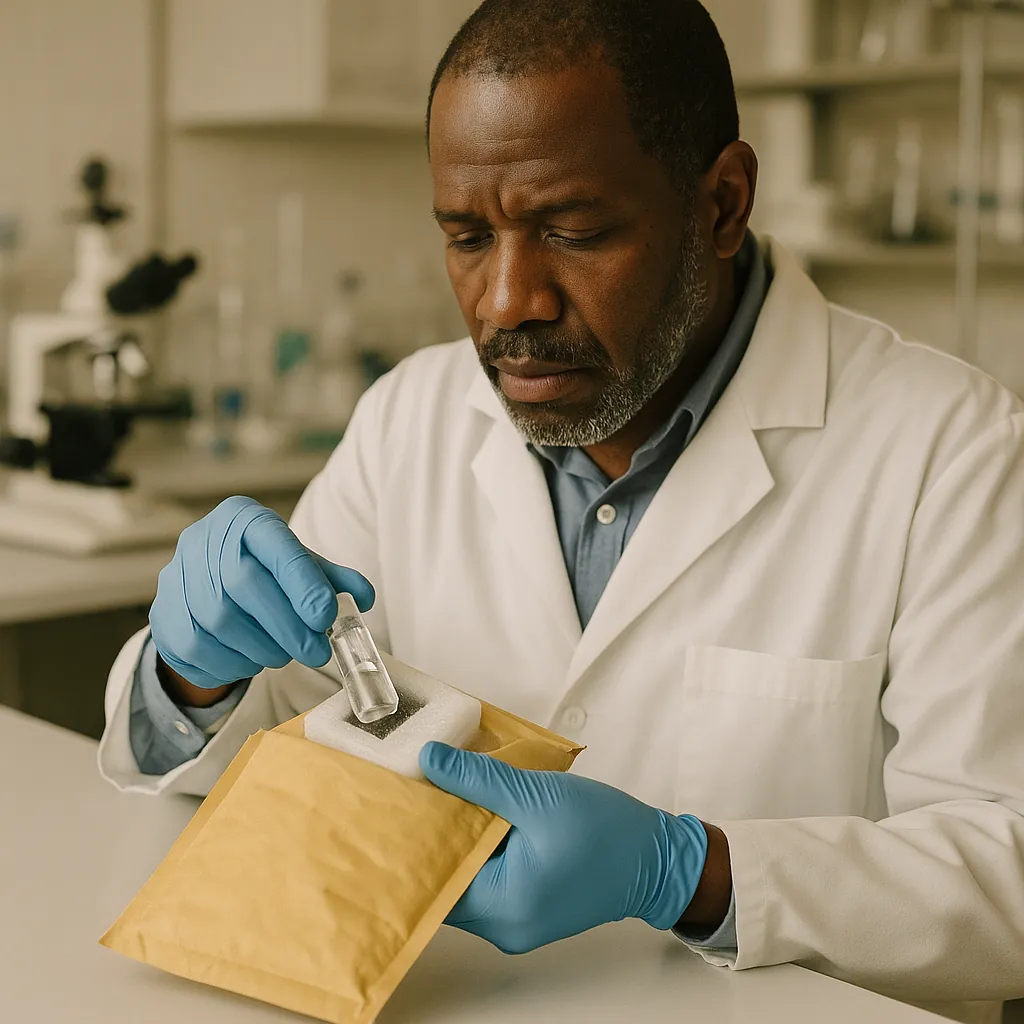
  2. Chemist opening a padded mailer to reveal a glass vial nested in foam

    02

    Opened under controlled conditions

    Contents are photographed as received. Label claim is recorded before anything is drawn, so measured quantity has something to be measured against.

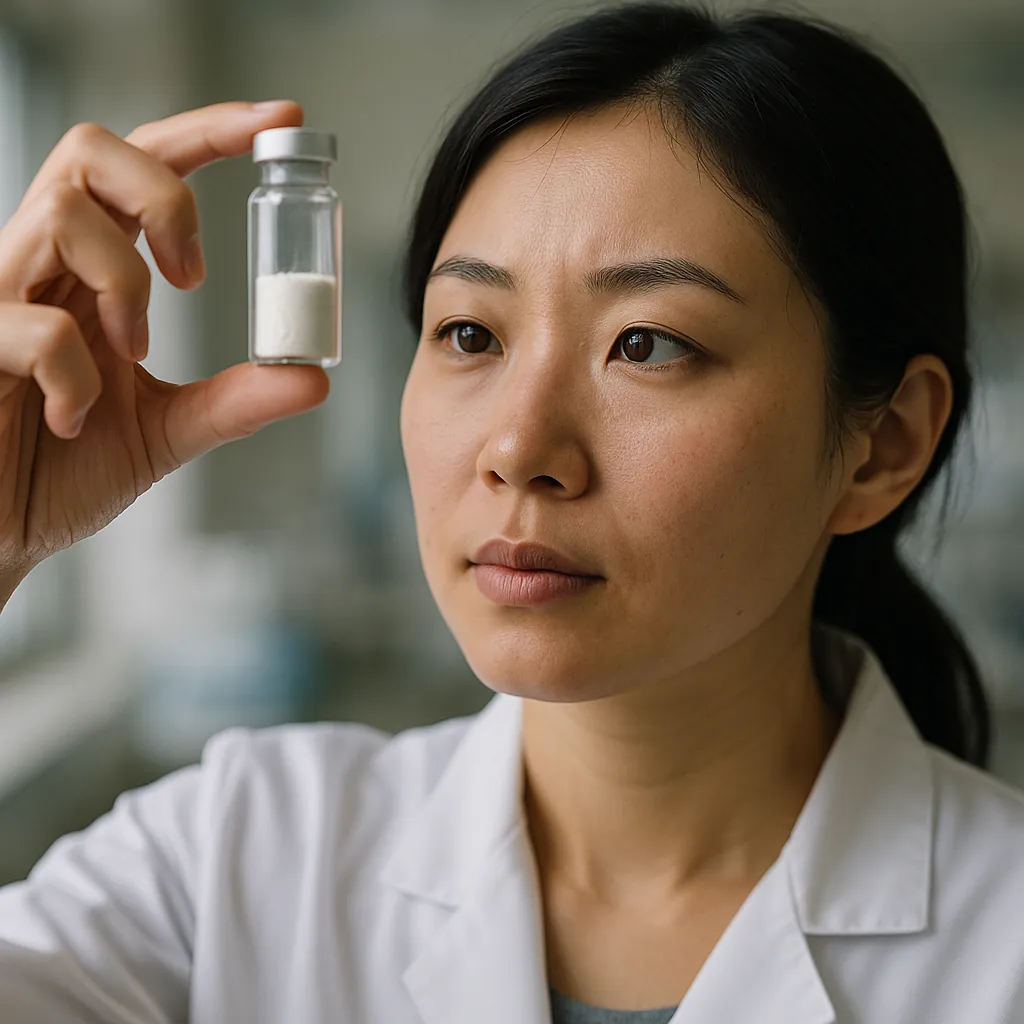
  3. Chemist holding a glass peptide vial of lyophilised powder up to the light

    03

    One vial, two questions

    What is actually in it, and how much. Purity and quantity are separate analyses, and a product can pass one while failing the other.

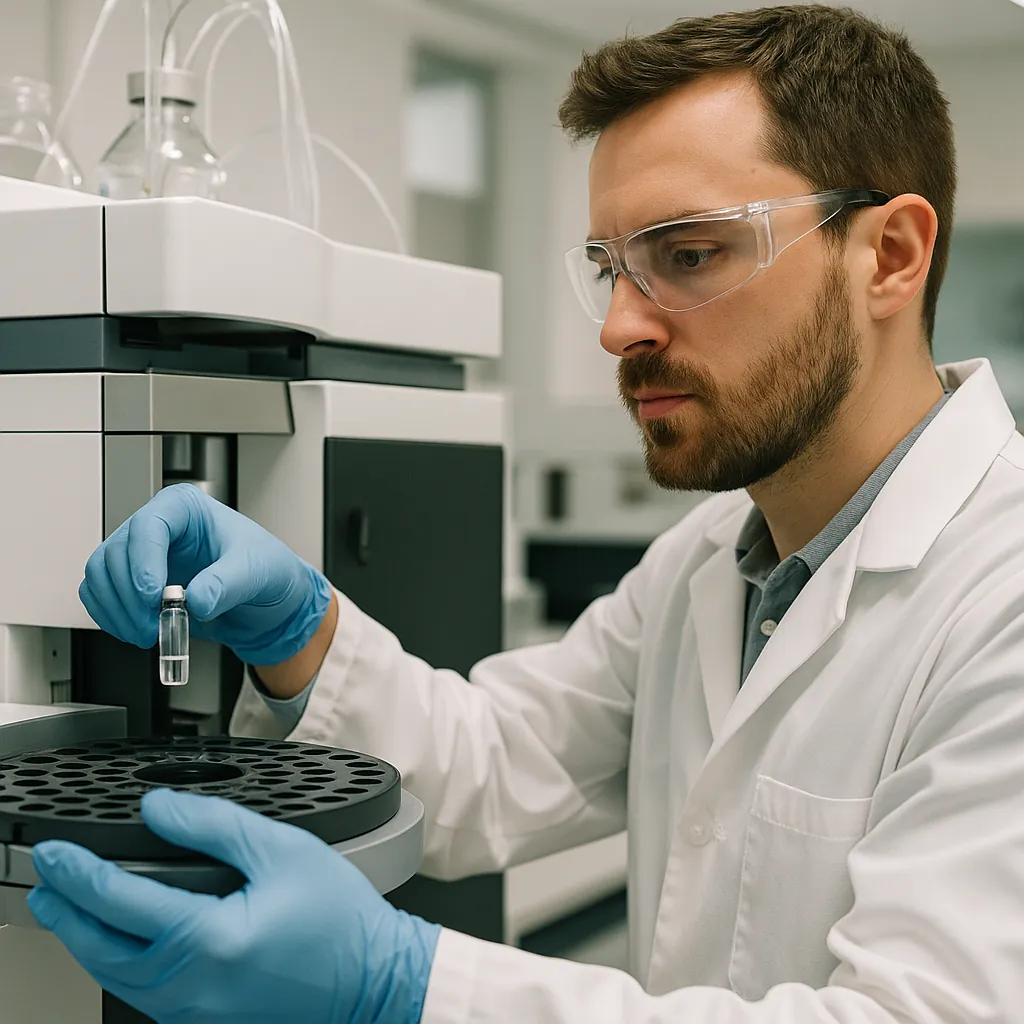
  4. Chemist loading a sample vial into an LC-MS/MS autosampler tray

    04

    RP-HPLC with LC-MS/MS confirmation

    Separation resolves the peaks. Mass spectrometry confirms the peak is the compound it claims to be rather than something that merely elutes nearby.

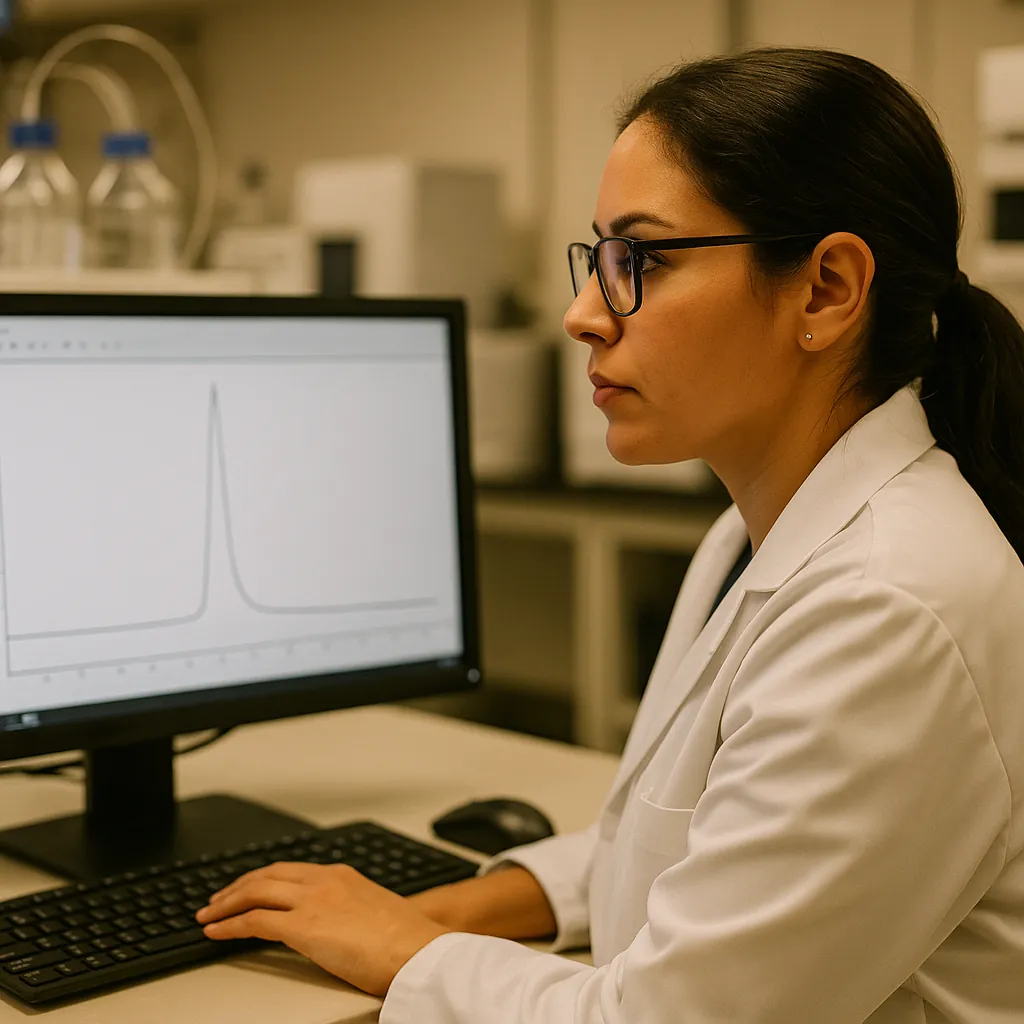
  5. Analyst reviewing a chromatogram peak on a laboratory workstation

    05

    The chromatogram resolves

    Peak area against reference standard gives purity. Related substances are reported, not omitted. A failing result is issued exactly like a passing one.

  6. A signed certificate of analysis on the bench beside the sample

    06

    The certificate is issued

    Method, instrument, analyst, date and lot on one document. Signed by the chemist who ran it, not by a brand.

  7. Workstation showing a transaction hash confirming on a public ledger

    07

    The document is anchored

    The certificate is hashed with SHA-256 and the hash is written to a public ledger. From that block onward the document cannot be altered without detection.

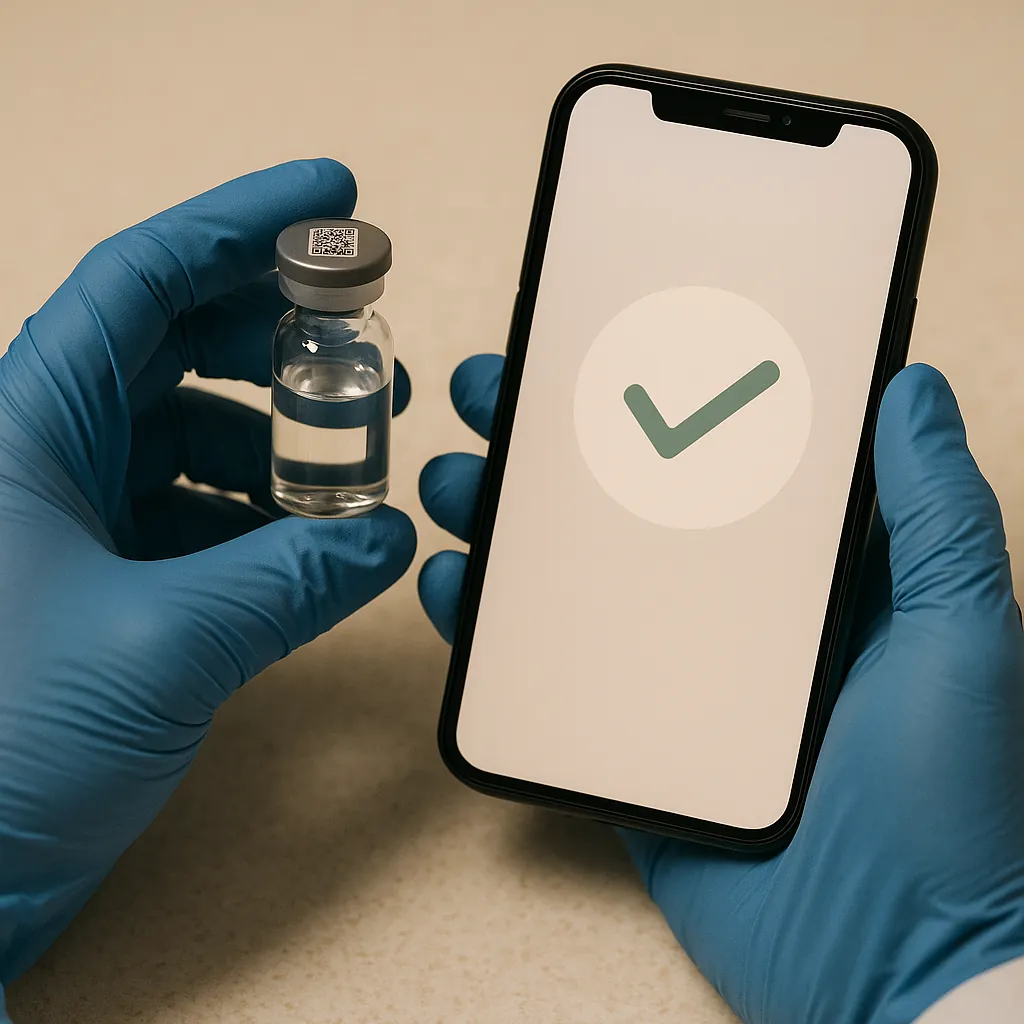
  8. A QR code on a certificate being scanned to open the public record

    08

    Anyone can check it

    A QR on the certificate resolves to the public record. No account, no request to us, no trust required in our server.

VERIFICATION

Anchored, not just published

Publishing a certificate proves a lab is willing to show its work. Anchoring proves the certificate has not changed since it was issued. Those are different guarantees, and only one of them survives the lab itself being wrong, careless, or dishonest later.

Every certificate we release is reduced to a SHA-256 hash and that hash is written to a public chain. The document is then self-proving: recompute the hash, compare it to the block. If they match, the certificate in your hand is byte-for-byte the one we issued.

5 certificates anchored to date. Anyone can check any of them without contacting us.

  1. No verification at all

    MOST VENDOR-SUPPLIED COAS

    A PDF attached to a product page. Nothing connects it to a lab, a lot, or a date. Trivial to edit, and edited often.

  2. Lab lookup portal

    THE STRONGEST OF OUR COMPETITORS

    The lab publishes results so a certificate can be checked against their copy. Genuinely good — and it still asks you to trust that the lab has not quietly revised its own record.

  3. Cryptographic anchoring

    PUREFORM

    The certificate is hashed and the hash is written to a public ledger we do not control. Change one character of the document and the hash no longer matches. You are not trusting us — you are checking arithmetic.

THE CERTIFICATE

This is what you actually receive

Two real releases from the registry — one that passed and one that did not. Both were issued the same way, and both are anchored. A lab that only shows you its passes is showing you marketing.

RELEASED — PASSING RESULT

BPC-157

PF-2026-0841 · Lot BPC-240815-A

PASS
SUBMITTED BY
Meridian Peptide Co.
RELEASED
2026-08-14
METHOD
RP-HPLC-UV (220 nm) with LC-MS/MS confirmation

RESULTS

  • BPC-15798.7%

    5.02 mg measured against 5 mg claimed · +0.4%

DOCUMENT HASH

9f2c41ab7d…5a7e9d02

Anchored on Base, block 24,881,402

Verify this certificate

RELEASED — FAILING RESULT

CJC-1295 (no DAC)

PF-2026-0830 · Lot CJC-240715-D

FAIL
SUBMITTED BY
Apex Compounds LLC
RELEASED
2026-07-21
METHOD
RP-HPLC-UV (220 nm) with LC-MS/MS confirmation

RESULTS

  • CJC-129576.2%

    1.88 mg measured against 2 mg claimed · -6.0%

  • Unidentified related substance18.9%

Primary analyte below the 95 percent purity release threshold. A single unidentified related substance accounts for 18.9 percent of total peak area. Client notified 2026-07-21.

DOCUMENT HASH

7b9d1f3a5c…a3c5e7b9

Anchored on Base, block 24,712,058

Verify this certificate

Method, stated

Not “lab tested”. The instrument, the detector, the wavelength and the confirmation technique, so the result can be reproduced or challenged.

Purity and quantity, separately

A product can be pure and underdosed at the same time. Reporting one number hides that; we report both against the label claim.

Related substances, named

If something else is in the vial it appears here, with its share of total peak area. Omitting it would make a failing sample look clean.

Document hash

SHA-256 over the certificate. Recompute it yourself and compare it to the block below — no part of that check runs on our servers.

A certificate is only worth the ability to check it.

Certificates circulate as screenshots and PDFs. They get edited, reused across lots, and attributed to labs that never saw the sample. The document is easy to produce and, until now, hard to check.

01

We publish results we would rather not publish

Failing and out of specification results appear in the public registry alongside passing ones. A registry that only shows passes tells you nothing about the lab.

02

Purity and quantity are reported separately

A vial can be 99 percent pure and contain two thirds of its label claim. Reporting a single number hides the failure that actually matters to the buyer.

03

Tamper evident, and honest about what that means

We write a hash of each certificate to a public ledger. That proves the document has not been altered since we released it. It does not, and cannot, prove the sample was good. Only the result on the certificate says that.

Where we are on accreditation

ISO/IEC 17025 accreditation is in progress. We are not an accredited laboratory today, and we will not describe ourselves as one until the audit completes. Testing is performed to documented internal methods with reference standards and instrument suitability checks recorded for each run.

If your application requires results from an accredited laboratory, tell us before you ship. We will say so plainly rather than take the work.